
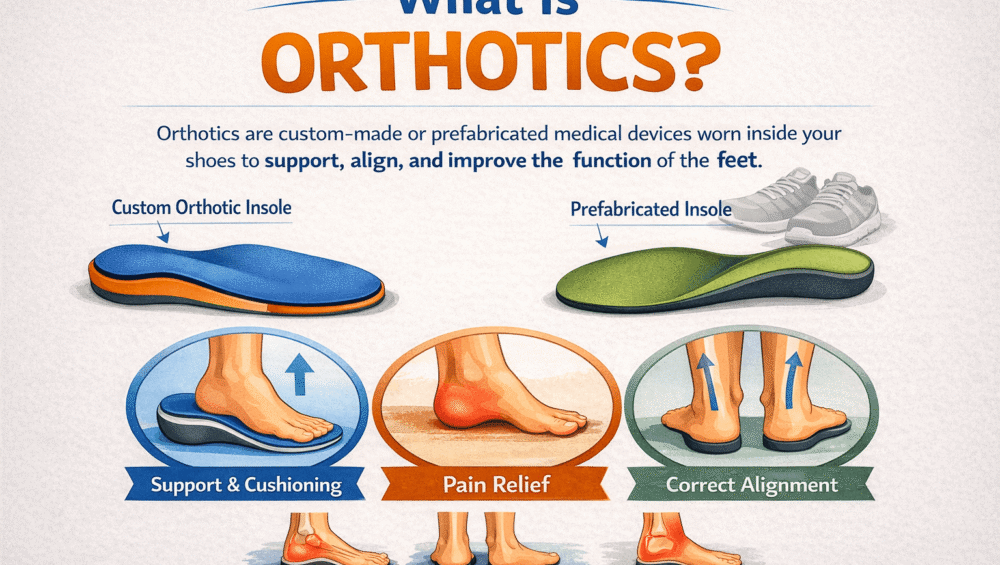
Orthotics play a crucial role in improving mobility, reducing pain, and supporting proper body alignment. Whether you’re dealing with foot pain, posture issues, or recovering from an injury, orthotics can significantly improve your quality of life. In this blog, we’ll break down what orthotics are, how they work, and who can benefit from them.
What Are Orthotics?
Orthotics (or orthotic devices) are specially designed medical supports worn inside shoes or attached externally to help support, align, prevent, or correct musculoskeletal deformities. They are commonly used to improve the function of the feet, ankles, knees, and even the lower back.
Orthotics are often prescribed by healthcare professionals such as podiatrists, orthopedic doctors, or physiotherapists based on an individual’s specific condition.
How Do Orthotics Work?
Orthotics work by:
- Correcting abnormal foot movement
- Redistributing pressure across the foot
- Improving posture and body alignment
- Reducing strain on muscles, joints, and ligaments
- Enhancing balance and walking efficiency
By addressing the root cause of pain rather than just symptoms, orthotics provide long-term relief and support.
Types of Orthotics
1. Custom Orthotics
Custom orthotics are tailored specifically for your feet using molds or 3D scans. They are designed to treat specific conditions and offer the highest level of comfort and correction.
Best for:
- Flat feet
- High arches
- Plantar fasciitis
- Chronic foot or knee pain
2. Prefabricated (Over-the-Counter) Orthotics
These are ready-made orthotics available in standard sizes. While not customized, they provide basic support and cushioning.
Best for:
- Mild discomfort
- General foot fatigue
- Everyday support
3. Functional Orthotics
Made from semi-rigid materials, functional orthotics control abnormal motion and are often used by athletes.
Best for:
- Sports injuries
- Overpronation or supination
- Active lifestyles
4. Accommodative Orthotics
Softer and more flexible, these orthotics provide cushioning and pressure relief.
Best for:
- Diabetic foot care
- Arthritis
- Sensitive or sore feet
Common Conditions Treated with Orthotics
Orthotics are widely used to manage and prevent various conditions, including:
- Plantar fasciitis
- Flat feet or high arches
- Heel pain and foot pain
- Knee, hip, and lower back pain
- Bunions and corns
- Arthritis
- Diabetic foot complications
Who Should Use Orthotics?
You may benefit from orthotics if you:
- Experience foot, knee, or back pain
- Stand or walk for long hours
- Play sports or lead an active lifestyle
- Have diabetes or circulation issues
- Notice uneven shoe wear
- Have posture or gait problems
Benefits of Using Orthotics
- ✔ Pain relief and comfort
- ✔ Improved posture and alignment
- ✔ Better balance and stability
- ✔ Injury prevention
- ✔ Enhanced daily mobility
- ✔ Long-term joint health
Orthotics vs Insoles: What’s the Difference?
While often confused, orthotics and insoles are not the same.
- Insoles mainly provide cushioning and comfort
- Orthotics are medical devices designed to correct biomechanical issues
Orthotics focus on treatment, while insoles focus on comfort.


